Archive for the 'Uncategorized' Category

The poems of Qiao Chonglie

9 May 2012

The following literary work has recently proved difficult to identify:

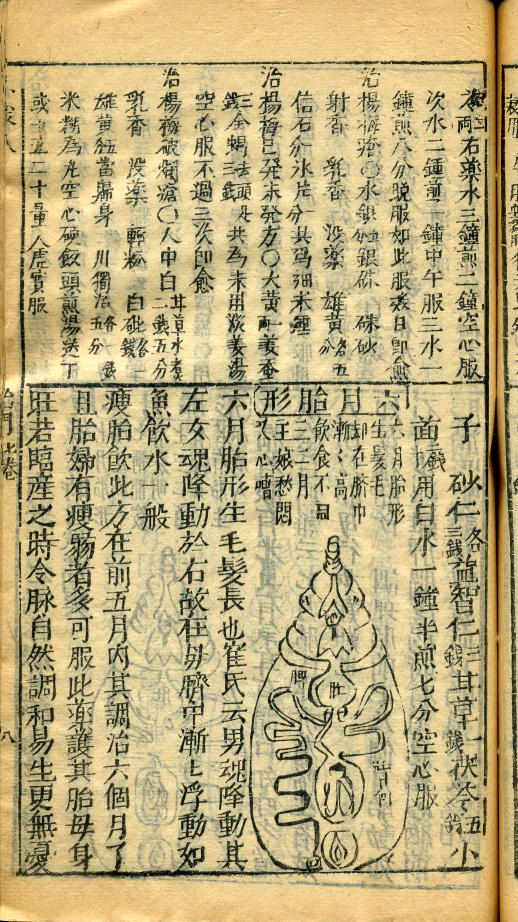
學齋詩集 四卷 ; 棗花莊錄稿 一卷 ; 蒹葭書屋詩 一卷 ; 芥舟集 一卷 / (清)喬崇烈撰
清康熙中刊民國重印本
線裝7冊 ; 28公分
Sinica 2529

This edition is rare indeed, although that does not necessarily make it valuable. The work is the poems of Qiao Chonglie 喬崇烈, who was a jinshi 進士 of 1706 (康熙四十五年) and good at calligraphy, but who seems to be otherwise undistinguished.

I have found some half dozen copies of the first part, Xuezhai shiji 學齋詩集, but only three other copies of all four sections, one in Peking University Library 北京大學圖書館, one in Huadong Normal University Library 華東師範大學圖書館, and one in the special collections of the University of Washington Library. The Peking copy is found in the CALIS union catalogue of old Chinese books 學苑汲古—高校古文獻資源庫, but does not seem to be in Peking University’s own catalogue (currently something of a disaster, like many library catalogues these days, including our own). The Washington copy is described in impressive detail in WorldCat, the detail doubtless deriving from Soeren Edgren’s Chinese Rare Books Project.

The first problem is when the blocks were cut, and by whom. The sections all seem to have been printed on separate occasions, and although they are alike in size and style, they are all in slightly different formats. There is nothing at all in any of the sections that gives specific information of the edition. All we have to go on is the date of the two prefaces to the main section, the first by Fang Bao 方苞, 1702 (壬午), and the second by Chu Xiongwen 儲雄文, 1710 (庚寅). In the text itself a few of the poems are dated to the 1690s. There seems to have been only one edition, presumably made in the Kangxi 康熙 period. More specifically, the Peking catalogue entry says that the blocks were cut by the Qiao family 寶應喬氏 itself – almost certainly true, but the only evidence to support this attribution appears at the end of the the Jianjia shuwu shi 蒹葭書屋詩 section, where the following words are found:「男溶受百河慎葦仝校字」.

The second problem is when the copy was printed. The main section seems to have been printed and circulated before the last three sections were cut, as it is sometimes found without them. But I have not found any evidence that the last three sections were ever printed and circulated independently of the first. The WorldCat entry says that the various parts were combined and printed around 1800 (康熙間板本, 約于1800年左右合印). This is presumably when the last of the sections is reckoned to have been cut. The General Library of the University of Tokyo 東京大学総合図書館 has a copy of the first section which is described as having been cut in 1702 (the date of Fang Bao’s preface) and printed during the Republic (康熙四十一年序刊民國中印本).

There are printed labels on each fascicle of the Bodleian copy which read 「…七世孫蔭岡敬題」. I have not been able to find any information about Qiao Yingang 喬蔭岡, but if he was the 7th generation grandson, that could indeed lead to a Republican date for the impression. This is supported by the fact that our copy has an unworn look about it, and bears the Bodleian date stamp 3 April 1934. On to the first leaf of the copy there is pasted a slip of brown paper which reads “From Chun-Nan middle school, Shih-pan-Choa, Nanking”, which I have not yet investigated.

Kiangnan Arsenal publications

30 April 2012

On Monday 16 April, we were visited by Li Changchun 李长春, Member of the Standing Committee of the Political Bureau of the Communist Party of China.

I doubt if even the most assiduous British follower of current events had the slightest idea of who Mr Li was, but in China the news was big. The following day a report of the visit appeared on page 3 of The People’s Daily, and it even made the CCTV news  – a friend in Nanking e-mailed me to say that he had seen me standing in the same room as Mr Li, and asked if I had actually spoken to him!

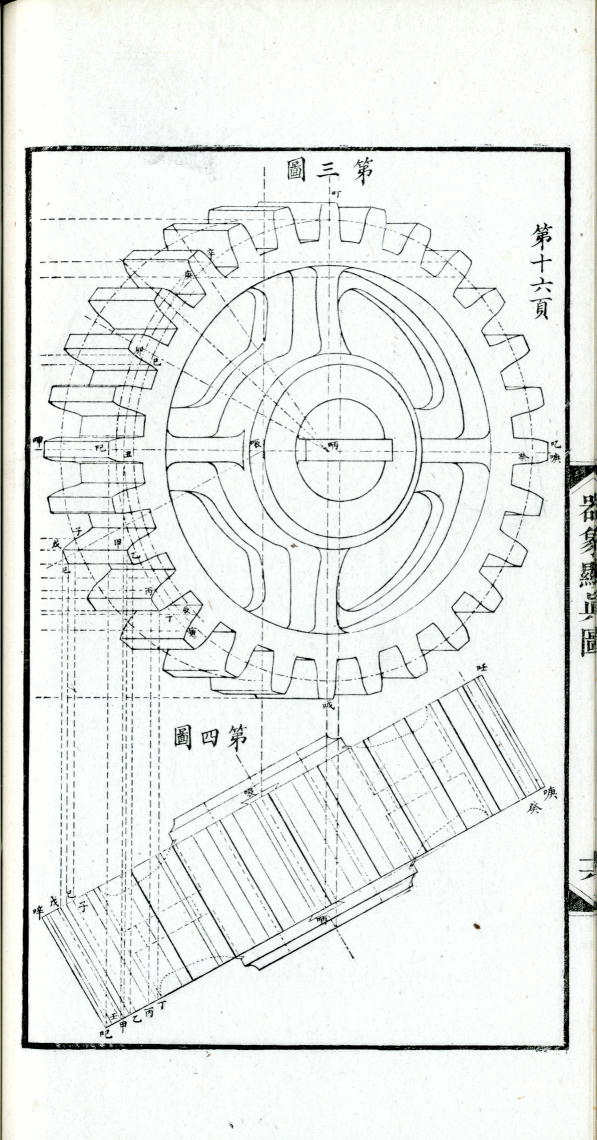
Indeed I had. In fact as usual with these visits, I had been asked to produce some Chinese objects for his delectation. The theme was sino-western contact, so one of the items I chose was a work translated and published by the Kiangnan Arsenal in Shanghai in the 1870s. It can be seen in this photograph in the bottom left corner:

Mr Li is in the centre of the picture, with the Osney copy of Magna Carta in front of him. I can be seen on the extreme right wearing a tie that had been presented to me on my last visit to the National Library of China – I thought I might produce it on this occasion, as Zhou Heping 周和平, its current director, was also present.

The Kiangnan Arsenal publication is described as follows in my catalogue:

器象顯真 四卷圖一卷 / (英)白力蓋輯 ; (英)傅蘭雅口譯 ; (清)徐建寅筆述
清同治十一年[1872]圖光緒五年[1879]上海江南製造局刊本
線裝3冊 : 圖 ; 30公分
本書由 Le Blanc 與 Armengaud 之《The engineer and machinist’s drawing book》 改編翻譯
本書為《江南製造局譯書》之一
Sinica 2162


The work is a compilation based on works by three 19th-century French engineers, V Leblanc (c.1790-1846), Jacques-Eugène Armengaud (1810-1891), and his younger brother Charles (1813-1893). It was translated orally by John Fryer (傅蘭雅) and written out by his Chinese colleague Xu Jianyin, as detailed in the catalogue entry.

For a long time I was puzzled by the attribution of the work to the Englishman Bai Ligai 白力蓋, whose identity I was quite unable to discover. Then, when preparing to write this blog entry, I revisited WorldCat and found that all the editions of The engineer and machinist’s drawing book (eight in total) had been published by the Glasgow firm Blackie and Son between 1855 and 1881. It therefore seems that “Bai Ligai” (or rather “Bailigai”) is not a person,  but Blackie, the company that had organised the original translation and compilation from the French.

I chose to show this work to Li Changchun because of the exceptional quality of its illustrations. But it is actually one of many, printed in a uniform style and known collectively as Jiangnan zhizaoju yishu 《江南製造局譯書》, although this congshu title does not appear in any of the contents.

These works were produced by the translation bureau 翻譯館 of the Kiangnan Arsenal 江南製造局, of which the current online Encylopaedia Britannica says:

Jiangnan Arsenal, Chinese (Pinyin) Jiangnan Binggongchang or (Wade-Giles romanization) Chiang-nan Ping-kung-ch’ang, also called Kiangnan Arsenal,  in Shanghai, major Chinese centre during the 1860s and 1870s for the manufacture of modern arms and the study of Western technical literature and Western languages. It was opened in 1865 as part of China’s Self-Strengthening movement. Begun as an ironworks base with machinery purchased from abroad, the arsenal was developed primarily by Zeng Guofan and Li Hongzhang. During the 1860s and 1870s it was the most successful arsenal in East Asia and one of the greatest in the world. Westerners were initially employed to instruct the Chinese labourers in the manufacture and use of the arms. In 1868 the Jiangnan Arsenal produced the first modern Chinese steamship. Its translation bureau, directed by the Englishman John Fryer, translated more than 160 foreign works into Chinese. The arsenal was managed by Chinese and staffed at one time by some 3,000 Chinese workmen, who were paid four to eight times better than the average farmer or coolie labourer. In the early 20th century it gradually declined in productivity, chiefly because of apathy and incompetent leadership. The shipbuilding department became an independent boatyard in 1905, and the arsenal—renamed Shanghai Arsenal—remained in operation until the early 1930s.

A lengthy article on the work of the translation bureau by Fryer himself was published in the North China Herald for 29 January 1880 (pp.77-81). In this we are informed that as of that date, the bureau had published 98 works, a further 45 works had been translated buy not yet published, and 13 were in the course of translation, making a total of 156. “The statistics have been carefully arranged in three lists, which, however, are too cumbersome for insertion in the columns of a newspaper, but will be published shortly, together with this account, in the form of a pamphlet.” (p.81). Indeed they were, in Chinese, and the publication is as follows:

江南製造總局繙譯西書事略 不分卷 / (英)傅蘭雅撰
清光緒六年[1880]上海本局排印本
線裝1冊 ; 28公分
封面題名《譯書事略》
Sinica 2224

This work, like the 67 examples of the Arsenal’s publications which the Bodleian holds, was exhibited at the International Health Exhibition in London in 1884, and bears the characteristic yellow exhibition label.

Twenty-five years later, a lengthy account of the Arsenal (江南製造局記 十卷附錄一卷) was compiled by Wei Yungong 魏允恭, but the booklist (2:15-23) had grown to only 178 – the heyday of the translation bureau was the 1860s and 1870s. Original copies of this account, published in 1905 (清光緖31年), seem to be rather rare, but it has been reprinted a couple of times in recent decades.

The most complete collection of Kiangnan Arsenal translations I know of is in Kyoto University’s Institute for Research in Humanities 京都大学人文科学研究所, which holds 154 titles grouped together in their catalogue as a congshu with the title 《江南製造局譯書彙刻》 (see 京都大學人文科學研究所漢籍目錄, 上冊, 967-971).

Seals

27 March 2012

I need help with reading seals.

The internet has made the process a little quicker, in two ways.

Firstly, it is usually possible to read some of the characters on a seal, and if there are sufficient consecutive ones, a phrase-search in Google or Baidu will sometimes produce the answer – usually in an auction site, where another book bears the seal in question.

Secondly, I’m soliciting the help of interested parties by drawing their attention to my embryonic list of all the seals to be found in the books in our collections, starting with Backhouse:

http://www.bodley.ox.ac.uk/users/djh/seals/

I believe the fashionable term for this process is “crowd sourcing”.

I hope it works – I’ve wasted enough time with seal-script dictionaries.

Ten thousand treasures

8 February 2012

Among books of the same unknown provenance as Sinica 102 (my previous blog post), distinguished by the markings on their covers and inscriptions in French, is an edition of the well-known popular reference work The complete book of ten thousand treasures 萬寶全書. A work with this name first appeared in the Wanli 萬曆 period of the Ming, and its contents were re-arranged, augmented, and diminished in numerous subsequent recensions. The book is a joy, and is described as follows in my catalogue:

新刻天如張先生精選石渠萬寶全書 卷一~二十四﹑二十九~三十
(明)陽山主人武榮氏新編 ; (明)古潭山人天祿氏校閱
明崇禎辛巳歲[1641]存仁堂吳初照刊本
書名據目錄題
線裝4冊 : 圖 ; 24公分
Sinica 105

Works like this are classified as leishu 類書, which usually gets translated into English as “encyclopaedias”. In this case, the translation is appropriate, as the work is indeed an encyclopaedia in the western sense, albeit a rather downmarket one. Upmarket Chinese encyclopaedias are quite different, and for them we should translate the term leishu 類書 more literally: “classified writings”. These works do not consist of freshly-written articles on their subjects, but of extracts lifted directly from other texts, reproduced unedited and unchanged. Some of them are therefore of immense value, as they preserve texts which are otherwise lost – the Cefu yuangui 冊府元龜 referred to in my post The earliest printing is a good example. Encyclopaedias in general and our collection of them in particular deserve a post of their own, and in future they will get one. For now I will return to Ten thousand treasures.

In the title of the work, “Tianru Zhang xiansheng” 天如張先生 refers to the scholar Zhang Pu 張溥 (1602-1641, see Hummel, 52-53), “Tianru” being his courtesy name (zi 字); and he is said to have “carefully selected” (jingxuan 精選) its contents. A later edition (1758) in the Staatsbibliothek zu Berlin (Libri sin. 717) goes further and states quite explicitly at the beginning of the text of the first juan: 太倉天如張溥彙編. And the Bodleian edition has a prefatory tici 題詞 signed by Zhang Pu and in rather elegant cursive script. But these things nothwithstanding, it is most unlikely that Zhang Pu had anything to do with its compilation. It is even possible that the preface is fake, and that Zhang Pu had never even heard of the book. Printers and publishers were always using the names of well-known and respectable scholars to sell their books, and there are plenty of examples of this phenomenon in our collections.

The term Shiqu 石渠 is laden with literary significance and continues the theme of enhancing the book’s respectability. It refers to the Shiquge 石渠閣, one of the two halls where documents were kept in the Former Han dynasty’s Weiyang Palace 未央宫 at Chang’an (the other library was the Tianluge 天祿閣). It was in the Shiquge that in 51 BC the Five classics 五經 of Confucianism were given canonical status. And there too, in AD 79 in the Later Han, the emperor Zhang 章帝 personally convened a meeting of scholars to discuss the various interpretations of the Confucian canon, and the proceedings were recorded by the historian Ban Gu 班固 in the book Baihutong 白虎通.

The Bodleian edition may turn out to be a unique surviving copy (海內外孤本), but a version printed six years earlier by the same printing house is recorded in the Japanese online union catalogue of old Chinese books 全國漢籍データベース, where we find an edition in 34 juan (four more than the Bodleian edition), printed by Cunrentang 存仁堂 in the 9th year of Chongzhen (1635). This copy is in Tokyo Metropolitan Library 東京都立図書館 (特7780).

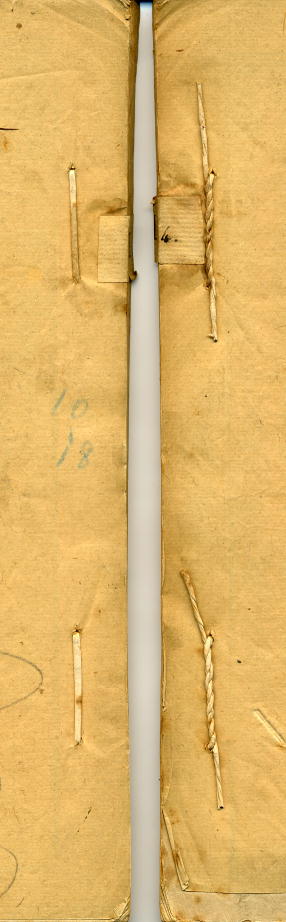
The Bodleian copy is in four fascicles, each held together by two paper screws. Covers were never added to complete a full “thread binding” 線裝, so that the book is almost certainly in the condition in which it was originally sold. Perhaps it never passed through the hands of a Chinese owner; it may have been bought personally by the foreigner who brought it to Europe, who would not have known how to complete the binding.

Yet despite its pristine appearance, the work lacks juan 25-28. Where these should be, there are two leaves from a seemingly unrelated work (but printed on the same paper) illustrating the “Twenty-four filial examplars” 二十四孝, six illustrations juxtaposed on each half-leaf.


I do not know why these four juan were not included. Perhaps the blocks were never cut for some reason, or perhaps the copy was printed after the fall of the Ming (the edition was only cut in 1641) and the four juan contained things that were no longer acceptable. I have so far been unable to locate the contents of these juan (as described in the table of contents) in the Berlin edition.

A banned geographical work

23 January 2012

When dealing with some of the uncatalogued parts of our Sinica Collection last week, I came across the following edition; amazingly, it has led me back to the Southern Ming. I didn’t expect another encounter with this period at all, let alone so soon after examining the Southern Ming calendars:

地圖綜要 殘二卷 / (明)李茹春鑒定 ; (明)朱國達等編輯
南明乙酉[1645]序刊本
線裝3冊 : 地圖 ; 26公分
全書有總﹑內﹑外三卷, 殘內卷(有缺)﹑外卷
Sinica 102

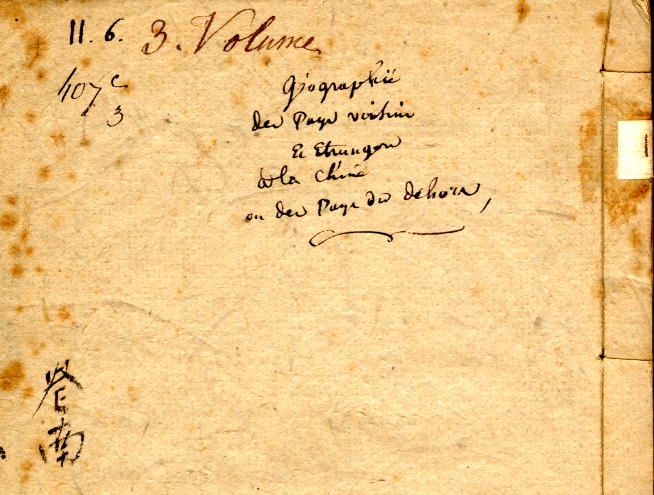
Unfortunately, our copy is incomplete. The first section (總卷) and pp.1-91 of the second section (內卷) are missing. We know that these two missing sections were contained in a single volume, because the three volumes we have are inscribed “2. Volume”, “3. Volume”, “4. Volume”, together with a description in French of their contents. I don’t yet know the ultimate provenance of these volumes, and can only be sure that they were in Oxford by the last quarter of the 19th century. It is possible that they are from the Chinese works once in the possession of Golius. The French inscriptions are of the 18th or possibly even the late 17th century. I think there is a good chance that the first volume might be in another European collection; my initial thought was the Bibliothèque Nationale, but it doesn’t appear to be in Courant’s catalogue.

A complete copy of the edition (in the library of Peking Normal University 北京师范大学) is reproduced in the series Siku jinhuishu congkan 四庫禁燬書叢刊 (史部, 18), where it is described as 明末朗潤堂刻本, apparently only because the words 朗潤堂藏板 appear on the title-page 封面 – they don’t seem to appear anywhere else. Comparison shows that this copy and the Bodleian’s are taken from identical blocks. We are therefore concerned with the same edition, and can take the evidences present in the Peking Normal University edition as applying to our copy, too, even if ours lacks them.

It is a geographical work, dealing with topography, administrative divisions, border regions, local produce and customs, towns and cities, famous places, and famous people. The complete edition is illustrated with 66 maps distributed throughout its text, and the maps of smaller areas are drawn to scale on a square grid. It is one of the earliest works of its kind.

Its final section (外卷, 182-210, present in the Bodleian copy) is concerned with the siyi 四夷, the barbarians which surrounded China on all four sides. These included the Manchus, for which reason the book was banned during the Qing Dynasty, when unflattering reference to the Manchus was a very common reason why books were ordered to be burnt either in their entirety (quanhui 全毀) or in part (chouhui 抽毀). The book is therefore a little rare, with perhaps 20 copies or so being extant, and its importance caused Peng Dejing 彭德经 to publish an article on it almost thirty years ago, with the particular aim of establishing its precise date: 《地图综要》版刻考 in 江西师院学报(哲学社会科学版), 1983:3, 58-60, 90. The only evidences in the edition itself (apart from the geographical text) are as follows, in order of their appearance: 朗潤堂藏板 (title-page); 黃兆文刻 (preface p.1, 版心下); and 乙酉 (date of Li Ruchun’s 李茹春 preface, and the only date found in the edition).

In printed and online catalogues, I have found over a dozen ways in which the date is expressed, from simply “Ming” 明 (in the National Library of China online catalogue) to “beginning of the Qing” 淸初 (in the Japanese online union catalogue of old Chinese books 全國漢籍データベース). Several say “end of the Ming” 明末 or “the Chongzhen 崇禎 period”. Some give a precise date using that of Li Ruchun’s preface, a cyclical expression equivalent to the western year 1645 which is translated variously into the second year of Shunzhi 順治二年, the first year of Hongguang 弘光元年 (the first Southern Ming reign period), or curiously “the 18th year of Chongzhen” 崇禎十八年 (in the Japanese online union catalogue, referring to copies in Tokyo University and the National Diet Library); there was no such year: the Chongzhen emperor hanged himself on Jingshan in the 17th year of his reign (on 25 April 1644) rather than face capture and execution by the rebel forces of Li Zicheng 李自成, who was on the point of taking Peking.

Almost certainly these are all the same edition in a dozen different guises, and probably the only edition of this work before modern times, although naturally this is subject to confirmation by comparison. In my catalogue, I have decided to describe it as quoted above (南明乙酉[1645]序刊本) on the basis of Peng’s reasoning, which may be summarised as follows.

As Li Ruchun was a juren 舉人 of 1627 and a jinshi 進士 of 1637, the year yiyou 乙酉 of his preface must be 1645. Although this is indeed the second year of Shunzhi, the first reign-period of the Qing Dynasty, both the work and its preface are wholly a product of the Ming: the term huangming 皇明 could not have been used in a text of the Qing, and the territorial extent of the work represents the Ming Dynasty at the height of its expansion. Most interestingly, the preface refers to the cataclysmic events which took place only months before it was written, when the non-Chinese invaders began to thoroughly overturn the old order; and Peng interprets some words of Wu Xueyan 吳學儼 (one of the compilers) in the fanli 凡例 section as suggesting that the work might have been produced as an appeal for help in achieving national salvation.

It would have been published in the area around Nanking under the first of the Southern Ming kingdoms, established by the Prince of Fu 福王, Zhu Yousong 朱由崧, who ascended the throne on 19 June 1644. His reign-period was known as Hongguang 弘光, and was reckoned from the first day of the lunar year following his accession, 28 January 1645, the year yiyou 乙酉. The Qing forces took Nanking on 8 June 1645, less than six months into this period, and captured the fleeing emperor on 15 June.